Importing furniture from Italy starts well before a container leaves port. Order a Meroni & Colzani sofa or table from Cabiate and the workshop builds it after the order, while we assemble the paperwork for the United States alongside it. Knowing the steps saves weeks and keeps the numbers on the quote honest.
the people in the chain
Four parties touch a shipment. The factory builds the piece and supplies the data: materials, wood species, the flammability label. A freight forwarder books the space on a ship or a plane. A customs broker files the entry with US Customs and Border Protection and pays the duty on the importer's behalf. The importer of record carries the legal responsibility for the entry. Our quote names each of them and covers the freight to your city.
Linosa makes a good example. The outdoor sofa comes in two elements, a seat and a seat with a backrest, and it takes armrests, bands and bands with an integrated stone or wooden top. Each of those parts can change the customs picture, because stone, wood and upholstery each raise their own questions. See the Linosa family.
codes and duty
US customs files furniture in chapter 94 of its tariff book. Anything built to be sat on, sofas included, goes in as 9401; tables, cabinets and nearly everything else go in as 9403. That heading fixes the duty rate, and what goods from Europe pay moves whenever Washington and Brussels change the terms. We give you no percentage on this page for that reason: a number printed today can turn wrong by the time your sofa ships.
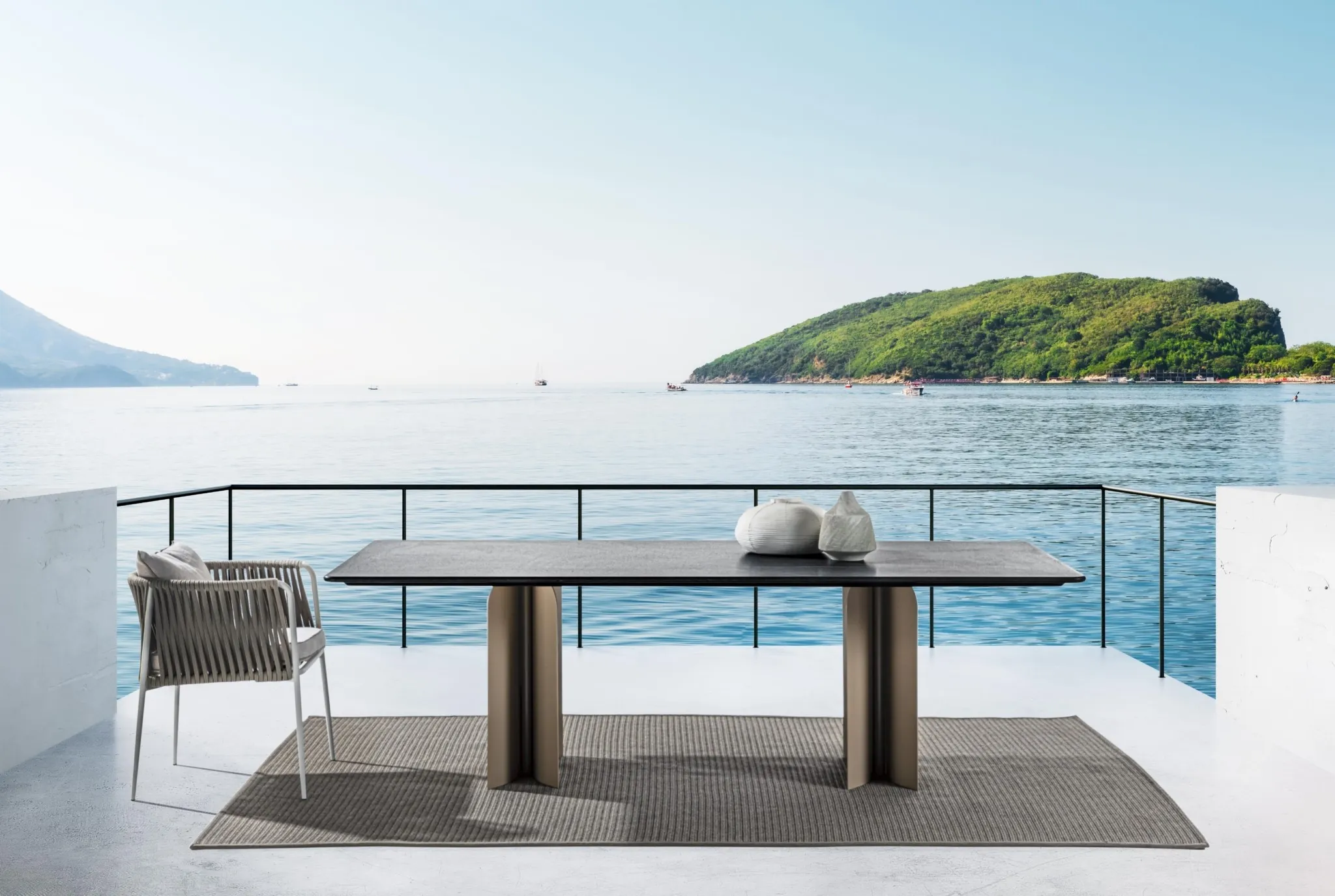
The duty is not the whole charge. A Merchandise Processing Fee is levied on the value of the goods, and anything arriving by sea also pays the Harbor Maintenance Fee. Both appear on the entry the broker files. The Bolgheri outdoor table, with a painted metal base and a stone top, goes in as a table under 9403. See the Bolgheri family.
wood, foam and labels
Wood brings its own form. Under the Lacey Act the importer declares every timber in the shipment on PPQ 505, naming it in Latin and giving the country where the tree was felled, and hidden wood counts: the core of a panel, the rails inside a frame. An outdoor piece with iroko legs needs this form, and so does an indoor cabinet with a walnut veneer.
A sofa or an armchair sold in the US has a TB 117-2013 tag sewn in. The standard is Californian, the federal rule copies it, and the tag says yes or no on flame retardants. Proposition 65, also from California, calls for a notice when a listed chemical is present above its limit, and plenty of sellers print that notice in every state.
Composite wood inside a cabinet falls under TSCA Title VI. A third party certifies the panels, and the importer keeps the records in case the EPA asks. The CPSC can ask for a certificate that ties a product to a lab test.
the paperwork, line by line
-
01 / 06
Chapter 94 heading
- What it settles
- Chapter 94 line: 9401 for anything you sit on, 9403 for the rest
- Whose desk
- The customs broker
- When it falls due
- Before the ship sails
-
02 / 06
Duty and the two port charges
- What it settles
- Duty on the declared value, the processing fee, and by sea the harbor fee
- Whose desk
- The broker files, the importer pays
- When it falls due
- On entry at the port
-
03 / 06
The Lacey declaration
- What it settles
- Every timber by Latin name, and the country where it was felled
- Whose desk
- The importer, from the factory's data
- When it falls due
- With any shipment that carries wood
-
04 / 06
The TB 117-2013 tag
- What it settles
- The California smolder standard sewn into upholstered pieces
- Whose desk
- The factory sews it, the importer checks it
- When it falls due
- Before the piece is sold
-
05 / 06
A notice under Proposition 65
- What it settles
- A notice when a listed chemical is present above its limit
- Whose desk
- Whoever sells the piece
- When it falls due
- Before the piece is sold
-
06 / 06
Tax in your own state
- What it settles
- The rate and the rules of the state you live in
- Whose desk
- Seller or buyer, depending on the state
- When it falls due
- On the invoice
tax, freight and the last mile
Sales tax depends on your state, and each state sets its own rules for sellers based elsewhere. Most orders cross by ship; a piece that cannot wait can fly, at several times the cost. The last mile matters for a big sofa, so tell us about the stairs, the elevator and the door widths when you write.
asking for the figure
The quote names the pieces, the covers and finishes, the lead time Cabiate confirms and the freight to your city, and it carries the broker's estimate of duty and charges on the day it is written. Put the Meroni & Colzani pieces and your city in the request at the foot of the page, and the reply brings every line of it.